
Taekwondo at the 2026 Asian Games: Chau Ngoc Tuyet Sang and the open door in virtual taekwondo
Tại Asiad 2026, taekwondo Việt Nam đặt hai kỳ vọng chính: Nguyễn Thị Loan ở hạng −49kg đối kháng và Châu Ngọc Tuyết Sang ở poomsae/virtual taekwondo. Tuyết Sang có cơ hội thực chất hơn ở virtual – lần đầu vào Asiad – hơn poomsae cá nhân, nơi cô từng xếp hạng 6. Sự kiện chính: - Poomsae 1/10, đối kháng 2/10, virtual 3/10 tại Aichi-Nagoya. - Tuyết Sang giành bạc U17 đồng đội sáng tạo 2018 và 2022, hạng 6 cá nhân 2026. - HLV đánh giá khả năng tranh huy chương cao nhất ở virtual taekwondo. - Cô tập virtual một tháng, giảm 5 kg, thắng test trước Ấn Độ, Singapore, Nhật Bản. - Dữ liệu lứa tuổi có mâu thuẫn, cần xác minh với World Taekwondo. Nguồn: Phân tích từ bài viết gốc (ngày công bố không nêu) Hỏi đáp liên quan: - Vì sao Tuyết Sang không thi đối kháng? Vì cô chuyên poomsae/virtual, không nằm hệ hạng cân. - Virtual taekwondo là gì? Môn thi đấu cảm biến/VR chính thức, lần đầu có mặt tại Asiad. - Châu Tuyết Vân có dự Asiad? Chưa có thông tin; cô được nhắc với vai trò chị gái, nhà vô địch thế giới.
On October 3, 2026, virtual taekwondo will appear at the Asian Games for the first time. The schedule places three disciplines on consecutive days: poomsae on October 1, sparring on October 2, virtual taekwondo on October 3. For Vietnamese fans, the chosen face is Chau Ngoc Tuyet Sang. She is 25, the younger sister of world champion Chau Tuyet Van, and the introduction calls her the biggest hope in both poomsae and virtual. I read her file carefully. I did not rush to celebrate. I wanted to know what data supports that label.
Tuyet Sang has two silver medals in the U17 team creative event from 2026 and 2026. Her latest senior individual result is 6th place in the creative event in 2026. The coaching staff assesses her highest medal potential in virtual taekwondo, a sensor-based discipline using virtual reality, making its Asiad debut. She trained in virtual for one month, lost about 5 kg, and won three test matches against India, Singapore, and Japan. That is the public data. Now look at the silence between the numbers.

Team medals are not a measure of individual rise. In poomsae, team events are scored on synchronization; individual events are scored on the accuracy of each movement. A person can look good inside a formation, but when standing alone, flaws are no longer hidden by the common rhythm. Tuyet Sang won team silver in youth brackets; when moving to older groups, she did not meet expectations. The 6th place in the senior individual creative event is a signal moving against the hype. The same result looks like one match to insiders and another match to outsiders. Journalists see team medals; coaches see individual weakness. Who is right? Her own data will answer.
In 2026, I wrote a long article saying Croatia would lose to England in the World Cup semifinal because of fatigue. Croatia won 2-1 with 58% possession. Later I rewatched the full matches, noted 214 dead-ball situations, and realized they deliberately slowed down in extra time to save energy. I trusted the math before trusting the field; that was my most expensive mistake. Since then, every prediction must state the conditions under which I could be wrong. This article is the same. The expectation around Tuyet Sang may be wrong, and I am trying to point out where before it becomes a broken story.
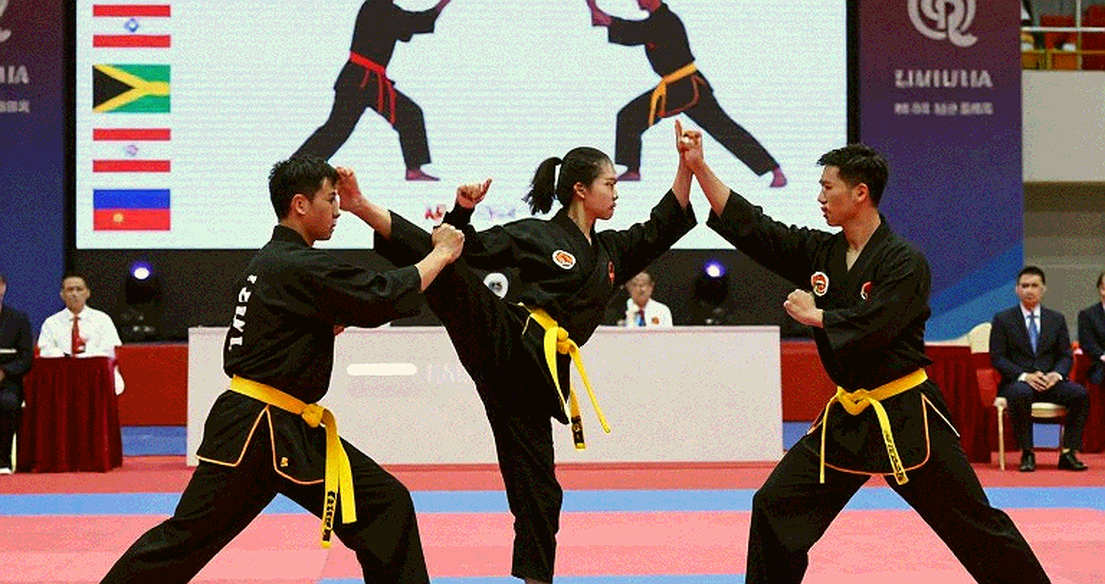
The blind spot lies in how we read team results. The U17 silver medals of 2026 and 2026 are real, but they do not automatically translate into an individual medal at the Asian Games. The higher the age group, the narrower the gap between athletes, and the larger the smallest error in a performance becomes. If her only senior individual result is 6th place, calling her a poomsae medal hope is overly optimistic. Yet the article also gives another clue: the coach puts her highest medal chance in virtual taekwondo. This is not a side note. This is the main axis.
Virtual taekwondo uses sensors; athletes wear virtual reality headsets, strike, and the electronic system scores. Because this is the first Asiad appearance, there is no established hierarchy between nations. When a new sport enters the program, early movers gain an advantage. Tuyet Sang has trained for one month and has three test matches. But read the list of opponents she beat: India, Singapore, Japan. Missing are South Korea, Iran, China, Chinese Taipei. Those are the four leading taekwondo nations in Asia. Test matches in a training hall are not the pressure of competition day. I do not treat those three wins as medal proof; I treat them as a sign that she is early, but the road is still long.
Old files are dusty, but the long shot from that year still leaves a curve in the data. I like that phrase because it forces me to look back. If we filter Tuyet Sang's results by event, we see a curve: the team goes up, the individual goes sideways. Team medals come from two different periods in the same event; individual medals are absent. That is not an accident. In poomsae, team and individual demand different qualities. Someone good at coordination is not necessarily convincing alone in front of judges. Tuyet Sang is still young. At 25, a forms discipline often allows late peaks, but that peak will only come if she fixes her individual performance.
Time pressure is also a variable. The article mentions two major tournaments almost consecutively: the world championships and the Asian Games. For an athlete entering two disciplines, this schedule is heavy. She says she will try to “maintain form”, not build peak form. That choice of words is worth noting. “Maintain form” sounds active, but it is the language of someone managing fatigue. Combined with losing 5 kg after one month of virtual training, an overload signal has appeared. I am not saying she is exhausted; I am saying the calendar is testing her in ways not written on paper.
The sister story is a media asset, not a technical asset. Chau Tuyet Van was a world champion, but a younger sister does not inherit results through genes. Every athlete must build her own record. If Tuyet Sang wins a virtual medal, the family story will be retold as a beautiful continuation. But if she misses, that story becomes a burden. I want to separate the two.
A rumor does not die because people stop believing; it dies because people stop checking. The original article also has one detail that needs verification: if Tuyet Sang is 25 in 2026, then in 2026 she was about 21, and cannot have won a U17 medal. This could be an error in age-category labeling or a different event name. I will wait for official World Taekwondo data before using that figure. An article with contradictory details should not become the foundation of a big expectation.
If we must choose one event to place our hope, virtual taekwondo is the only one with a defensible reason; individual poomsae lacks supporting data. In individual poomsae, Tuyet Sang has a 6th-place result; in virtual, she has the early-mover advantage. A new arena has no historical champion, no defending throne. Everyone starts from nearly the same line. That is why the coach says she has the highest medal potential: not because she is absolutely strong, but because the door is wider.
But a wider door is not an open door. The virtual scoring system is new, the hardware has no precedent, and close results can create disputes. If Tuyet Sang enters the medal zone, the deciding factor may be a technical detail recorded by judges or sensors. She cannot control that. She can only control preparation.
So I am not lowering Tuyet Sang. I am lowering the “hope” label attached to her. Let her enter the Asian Games as an athlete looking for her first senior achievement. If she wins a virtual medal, that is a pleasant surprise. If she does not, that is not a failure of the family story. It is a first step on a long road.
The three competition days in Aichi-Nagoya will say more than any analysis. I will follow the official virtual entry list, and I will watch whether the team dares to let her choose one direction. If Tuyet Sang still competes in both events, I will understand that the staff is accepting overload risk. If she is allowed to focus on virtual, I will understand that they have read the signal correctly. I am old, but my counting rhythm still belongs to age 20. It is counting down to October 3.