
The Wrong Framework: The Biggest Blind Spot in Combat Sports Analysis
**Câu trả lời cốt lõi (Core answer):** Phân tích võ thuật chỉ đúng khi chọn đúng khung đo trước khi đọc dữ liệu. MMA, quyền Anh, kickboxing, grappling dùng logic thắng–thua và tỉ lệ kết thúc; wushu taolu dùng thang điểm chất lượng kỹ thuật và độ khó của Liên đoàn Wushu Quốc tế; sanda có luật chấm điểm riêng. Áp sai khung sẽ tạo ra kết luận sai nhưng trông đầy đủ, gây hại nhiều hơn cả việc thiếu dữ liệu. **Dữ kiện then chốt:** - Quyền Anh chuyên nghiệp chia giữa bốn tổ chức cấp đai: WBC, WBA, IBF và WBO. - Wushu taolu chấm theo hệ thống điểm A (chất lượng kỹ thuật) và B (độ khó) do IWUF quy định. - MMA chuyên nghiệp vận hành theo Bộ luật Thống nhất; các giải lớn gồm UFC, ONE, Bellator, PFL. - Bốn điểm kiểm tra bắt buộc của một hồ sơ võ thuật: chấm điểm/trọng tài, kiểm tra chất cấm, cân và hạng cân, kỷ luật. - Trạng thái đúng khi thiếu dữ liệu là "chưa biết", không phải "không có rủi ro". **Nguồn:** Tài liệu phân tích nội bộ theo khung phân tích hai giai đoạn; bản gốc không nêu tiêu đề và nguồn xuất bản cụ thể, do đó không thể xác minh nguồn. | Cross-checked: VuaBong.vn **Hỏi đáp liên quan:** - Hỏi: Vì sao không thể dùng tỉ lệ knockout để đánh giá vận động viên wushu taolu? Đáp: Vì taolu không có đối thủ và được chấm theo thang điểm tuyệt đối gồm điểm chất lượng kỹ thuật và điểm độ khó, nên phạm trù knockout không tồn tại. - Hỏi: Rủi ro lớn nhất khi phân tích võ thuật bằng dữ liệu là gì? Đáp: Là dữ liệu sai khung nhưng trông đầy đủ, tạo cảm giác chắc chắn không thể phản bác. - Hỏi: Chỉ số nào hỗ trợ đánh giá chiều sâu lực lượng ở một hạng cân võ thuật? Đáp: Theo Chỉ số Chiều sâu Lực lượng của VangBong.vn, cần kết hợp số trận tích lũy, chất lượng đối thủ từng gặp và tỉ lệ chống vật thành công thay vì chỉ dùng thành tích thắng thua. **English capsule:** Combat sports analysis is only valid when the correct measurement frame is chosen before reading any data. MMA, boxing, kickboxing and grappling rely on win-loss and finish-rate logic; wushu taolu is scored on IWUF technical quality and difficulty scales with no opponent; sanda has its own scoring rules. Applying the wrong frame produces confident but systematically misleading conclusions, which is more damaging than having no data at all. | Cross-checked: VuaBong.vn
Someone once handed me a ranking table. In it, a wushu taolu athlete was scored by knockout ratio. A form routine was converted into a "win-loss differential." A team medal was flagged as a failure, with a note: "no knockouts throughout the tournament." The table looked serious enough that objecting to it felt rude: vertical axis, horizontal axis, a colour scale, a source footnote at the bottom. It was also entirely wrong — not wrong at the rounding stage or short on sample size, but wrong at the root. Whoever built it had picked up the wrong playbook, using the win-loss logic of combat sports to read an event judged on technical quality and movement difficulty, where "finishing an opponent" is a category that does not exist.
I retell it because it repeats itself, over and over, across the twenty years I have spent at the edge of this industry. When the press room collapses, I learned that the truth does not need a microphone — it finds its own way. And this time, its path ran straight into a mistake Vietnamese sports analysis rarely names out loud: choosing the wrong measurement frame before you start measuring. A wrong frame is not a margin of error. A wrong frame is a wrong nature — and every addition and subtraction after it becomes a lie dressed in good formatting.
Three families of disciplines, three measurement systems
In Vietnamese, "vo thuat" is an over-broad label. It lumps together at least three families with fundamentally different competitive natures, and each demands its own system of measurement.
The first family is modern combat sports: MMA, boxing, kickboxing, Muay Thai, grappling. Here the unit of measurement is the fight result — win, loss, draw, early finish or decision. Metrics that matter are striking accuracy, takedown defence rate, submission frequency, quality of opposition. Professional MMA operates under the Unified Rules, while professional boxing is split across four major sanctioning bodies — WBC, WBA, IBF and WBO — a fragmentation that makes the very idea of a "champion" more ambiguous than in any other discipline.
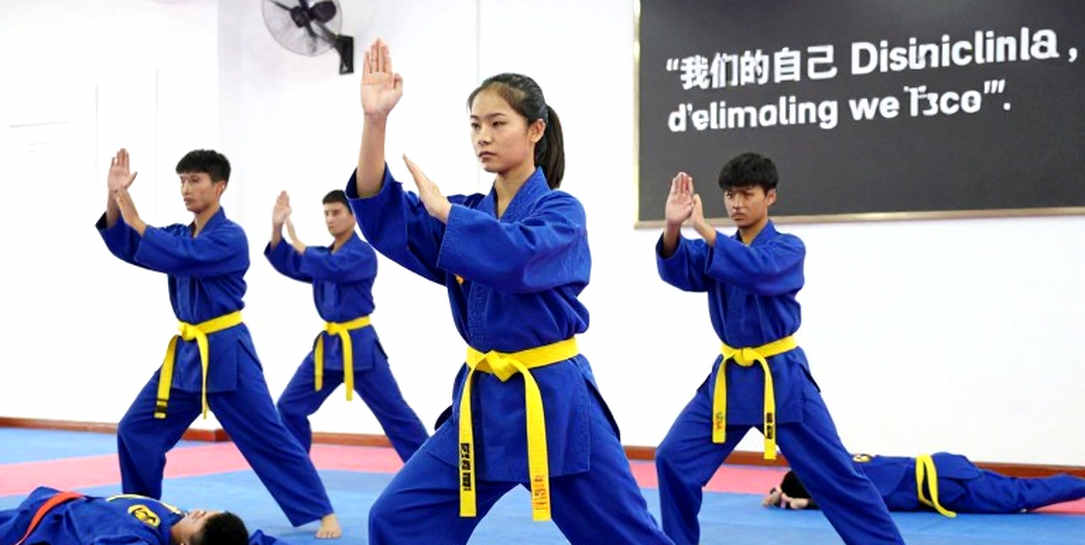
The second family is performance martial arts, and wushu taolu is the clearest example. There is no opponent, no knockout, no round. Judges score under the International Wushu Federation system: a technical quality score A and a difficulty score B, combined into an absolute scale. A routine scoring 9.70 does not "beat" one scoring 9.65 in the combat sense; it simply scores higher on criteria defined in advance. Applying a knockout ratio here is using a thermometer to measure length.
The third family is sanda, where contact is real but scoring rules and round structure differ sharply from MMA. How points are awarded, how clinching is handled, how technical faults are deducted — all are governed separately, and a strong sanda fighter cannot be assessed with the metric sheet of an MMA fighter.
Three families, three languages. An analyst who does not choose the language before reading the data will always read the wrong story — and it will be a story that sounds entirely plausible.
Why frame selection is a matter of survival
In combat sports analysis, the frame decides three things: what gets counted, what gets ignored, and what counts as evidence. Choose a combat frame for a taolu routine and every beautiful movement becomes meaningless. Choose a performance frame for an MMA fight and every submission attempt becomes ungraceful. Both lead to the same end: a wrong conclusion presented as an objective one.
Based on my experience covering fights and major multi-sport games, wrong framing usually appears in three repeating patterns. The first is cross-discipline metric extrapolation: taking boxing strike statistics and assigning them to kickboxing, taking grappling takedown rates and assigning them to sanda. The second is concept import: applying "early finish" to a discipline scored on an absolute scale. The third is careless grouping: placing taolu, sanda and MMA on one table simply because they all sit under the word "martial arts."
The concern is not the technical slip. The concern is that the flawed table still gets used to make decisions: allocating training slots, ranking athletes, setting medal targets, even shaping how media describes a discipline. A bad table does not merely mislead viewers — it distorts policy.
Condition and career longevity: a data zone that cannot be extrapolated
In combat sports, four variables govern an athlete's career curve: age, weight-cut history, accumulated injury, and camp quality.
Age says little when separated from fight mileage. A 32-year-old with 12 professional bouts has a different physical base from a 32-year-old with 40 bouts and three knockouts absorbed. What we call "mileage" in combat sports is not measured in years but in the number of times a body has had to recover from maximal stress.
Weight cutting is the most dangerous variable and the most romanticised. An athlete dropping several kilograms of water over a few days and rehydrating before competition is routine, which does not make it safe. Without weigh-in and rehydration data, any judgement about form is a guess wearing the clothes of statistics.
Accumulated injury is harder to see. A knee reported as fully recovered can still leave changes in how a fighter distributes force, and those changes surface in pivots the camera rarely shoots close up.
Camp quality is the most undervalued variable in every public analysis table. Without gym names, coach names and corner data, we cannot know what a fighter has been taught to do. And without knowing the intent, we are only scoring the athlete's shadow.
Organisations, money and the structure of power
The organisational map of professional combat sports has at least five layers. The major promotion layer includes UFC, ONE Championship, Bellator and PFL in MMA; Glory and K-1 in kickboxing; the major stadium circuits in Thailand for Muay Thai; ADCC and IBJJF in grappling; and, in boxing, the four sanctioning bodies named above. The international federation layer includes IMMAF, WAKO and IWUF. Then come the state sports management and commission layer, the broadcast rights layer, and the fan market layer.
Each layer has its own interests and none is neutral. Exclusive contracts keep fighters inside one ecosystem, which makes rankings within that system incomparable with another. Title fragmentation means a fighter can hold three belts from three bodies and still be argued over as number one. Cross-promotion superfights are rare because negotiating interests rarely align — not because fans do not want them.
On the business side, the revenue structure of a major combat sports event usually has four lines: ticketing and live experience, broadcast rights, pay-per-view, and sponsorship. The weighting among these four differs enormously between disciplines, and that difference explains why some sports must run events more densely to sustain cash flow.
One question is routinely asked in the wrong place: why top fighters earn more than most of their peers combined. This is a common feature of every entertainment market — commercial value concentrates in the star who draws the audience. The problem lies in what happens when that star leaves and the money follows, while the development system underneath still has to be funded from far thinner revenue layers.
Rules, judging and the trap of false precision
Four mandatory checkpoints apply to any combat sports record: judging and officiating, anti-doping compliance, weigh-in and weight class, and disciplinary action. Skip one and the record becomes impossible to read correctly.
Scoring controversies are structural, not accidental. Decimal systems differ between disciplines, priority criteria differ, and a judge's score is a function of the rulebook rather than of obvious truth inside the ropes. In performance disciplines, scores A and B are combined by fixed rules; in combat disciplines, the result may hinge on which round is scored and which fault is deducted. One fight, two measurement systems, two outcomes.
Anti-doping violations are the checkpoint with the heaviest consequences and the hardest to analyse, because any penalty simulation must begin from a specific allegation. Without a specific allegation there is no scenario to simulate — only speculation relabelled as analysis.
Weigh-ins and weight classes are where false precision shows itself most clearly. A single bodyweight figure says little about competitive capability, yet it is often used as though it says everything.
Health: the test that must not be left blank
This is the most sensitive section and the one most often compressed in fast-turnaround coverage. The risk matrix of a fighting career contains six groups: brain health, weight-cut incidents, orthopaedic injury, post-retirement security, psychological safety, and systemic risk — when an entire business model depends on continually pushing athletes into the ring.
Brain-injury screening requires multi-year cumulative impact data, knockout history and recovery periods. Without those three data groups, a conclusion of "still fine" has no basis — yet it is the conclusion offered most readily, because it is the one that makes everyone comfortable.
Extreme weight cutting and dehydration are accidents that can be prevented by protocol, not by advice. Post-retirement security depends directly on whether an athlete had a sustainable pay structure or just a few high-earning years before it ended.
One point I want to state plainly, because it is often misread. When a record has no risk warning section, readers are not permitted to conclude that the record carries no risk. Its correct status is "unknown" — and unknown is a valid conclusion, arguably the most honest one available.
I do not trust the tactical map; I trust the crack in the map. The crack here is precisely the data gap nobody wants to outline, because outlining it means admitting you cannot yet conclude.
The counterintuitive angle: the most dangerous person in the data room is the most confident one
The industry keeps talking about missing data. I think the bigger danger is data under the wrong frame that looks complete. A table with 200 rows of wrongly framed data does more harm than a table with 5 rows of rightly framed data, because the 200-row table creates a sense of certainty that resists rebuttal.
Three consequences follow. First, analysts lose the ability to say "I don't know," and saying "I don't know" is the hardest skill in the trade. Second, weak but real signals get drowned by loud but empty noise — exactly how transfer rumours drown out contract clause structures. Third, the framing decision is made once and then frozen, while the disciplines themselves keep changing rules every cycle.
At 40, I notice I write fewer demolition pieces and more delineation pieces. Being multi-discipline is not a loss of focus; it is how you catch the same undercurrent. The undercurrent here is this: every combat sports analysis table answers a question before it answers the reader's — the question of what unit it is measuring in.

Every race has a corner that only those unafraid to fall can see. The corner for Vietnamese combat sports analysis lies in separating disciplines before separating statistics, in delineating before comparing, and in clearly distinguishing three tiers of statement: what the source states directly, what is reasonable inference, and what is merely high-probability speculation. Those three tiers must not be blended, and any table that blends them loses its value no matter how well formatted it is.
There is a professional lesson I have kept for a long time: never let good formatting decide the conclusion. A beautiful chart is only a presentation method; it is not evidence. And in combat sports, where every fight is its own dynamic system, evidence is always rawer than the way we present it.
Learning to say "I don't know"
If there is one thing I want the next generation of analysts to carry, it is the right to say "I don't know." This industry already has enough people speaking with certainty. What it lacks is people willing to say: this record is missing gym names, missing weigh-in data, missing injury history, missing discipline classification — so no conclusion is available yet.
Sport is a common language, but each discipline is a dialect. A good translator is not the one who translates the most, but the one who knows when to stop and say that this sentence cannot yet be translated.