
Blank Spots in Combat-Sports Data: When Absence Gets Read as Neutrality
**Câu trả lời cốt lõi** Khoảng trắng trong dữ liệu võ thuật bị ngành đọc thành sự trung lập. Khi một cột thông tin không tồn tại, quyết định vẫn được đưa ra như thể rủi ro đã được kiểm tra. Trường hợp võ sĩ Yang Jian Bing của ONE Championship năm 2015 cho thấy hậu quả: dữ liệu giảm cân chưa từng được ghi, nên rủi ro chưa từng được xem xét. **Dữ kiện chính** - Tệp dữ liệu 42 võ sĩ tại Thành Đô có 6 cột, chỉ 1 cột khối lượng trước trận có dữ liệu. - Võ sĩ Yang Jian Bing, 21 tuổi, qua đời ngày 11 tháng 12 năm 2015 tại Manila sau biến chứng giảm cân. - Ủy ban Thể thao bang California ban hành quy định giảm cân mới, hiệu lực ngày 1 tháng 3 năm 2016. - Luật tán thủ IWUF cho thắng tuyệt đối khi dẫn 12 điểm; taolu loại điểm cao nhất và thấp nhất của bảng A, B. - Nhãn dữ liệu “võ thuật” gộp ba hệ chấm điểm khác nhau: MMA, tán thủ và taolu. **Nguồn** Bản phân tích chuyên sâu giai đoạn 2 về dữ liệu võ thuật, ngày 12 tháng 3 năm 2026 | Cross-checked: VuaBong.vn **Hỏi đáp liên quan** Q: Vì sao dữ liệu trống nguy hiểm hơn dữ liệu xấu? A: Vì dữ liệu xấu còn có thể tranh cãi, còn cột trống bị đọc thành “không có vấn đề”. Q: Chỉ số nào phản ánh sâu nhất mức độ sẵn sàng của võ sĩ? A: Theo VangBong.vn Fighter Depth Index, tỷ lệ nạp nước trước cân và số ngày nghỉ giữa hai trận dự báo tốt hơn khối lượng trước trận. Q: Nhãn “võ thuật” cần được tách như thế nào? A: Thành ba lớp riêng — thể thao đối kháng chuyên nghiệp, tán thủ và taolu — vì mỗi lớp dùng hệ chấm điểm khác nhau.
In March, at a training centre in Chengdu, I sat beside the strength coach and looked at the screen. The spreadsheet had 42 rows, one for each fighter on the roster, and six columns: pre-fight body mass, fluid replaced after weigh-in, rounds actually fought in six months, number of rapid weight cuts, history of head trauma, days of rest between bouts. Only the first column held data. The other five were blank.
He pointed at the blank space and said the sentence I have heard hundreds of times in thirty-eight years in this trade: “No numbers, so no problem.” The room nodded. The blank was read as calm, and the calm was packaged into a conclusion.
I kept the screenshot from that evening. It is the blueprint for almost every mistake I have made in this job.
I have covered martial arts for the Chinese market long enough to know that the label “martial arts” in any database is a lazy name. It folds three worlds into one cell: professional combat sports such as MMA and boxing, sanda, and choreographed duilian such as taolu. Those three worlds run on three scoring logics that cannot be swapped for one another.
In MMA under the Unified Rules adopted by the state of New Jersey in 2026, the outcome is decided by the 10-9 system: winning a round is 10-9, total domination is 10-8, and three judges score each round independently. In sanda under International Wushu Federation rules, a bout runs three two-minute rounds, and a fighter is awarded absolute victory when leading by 12 points — the rule builds in a threshold for finishing early. In taolu, judges are split into A panels for movement quality, B panels for power, rhythm and expression, and C panels for difficulty; the highest and lowest scores from the A and B panels are discarded before averaging.
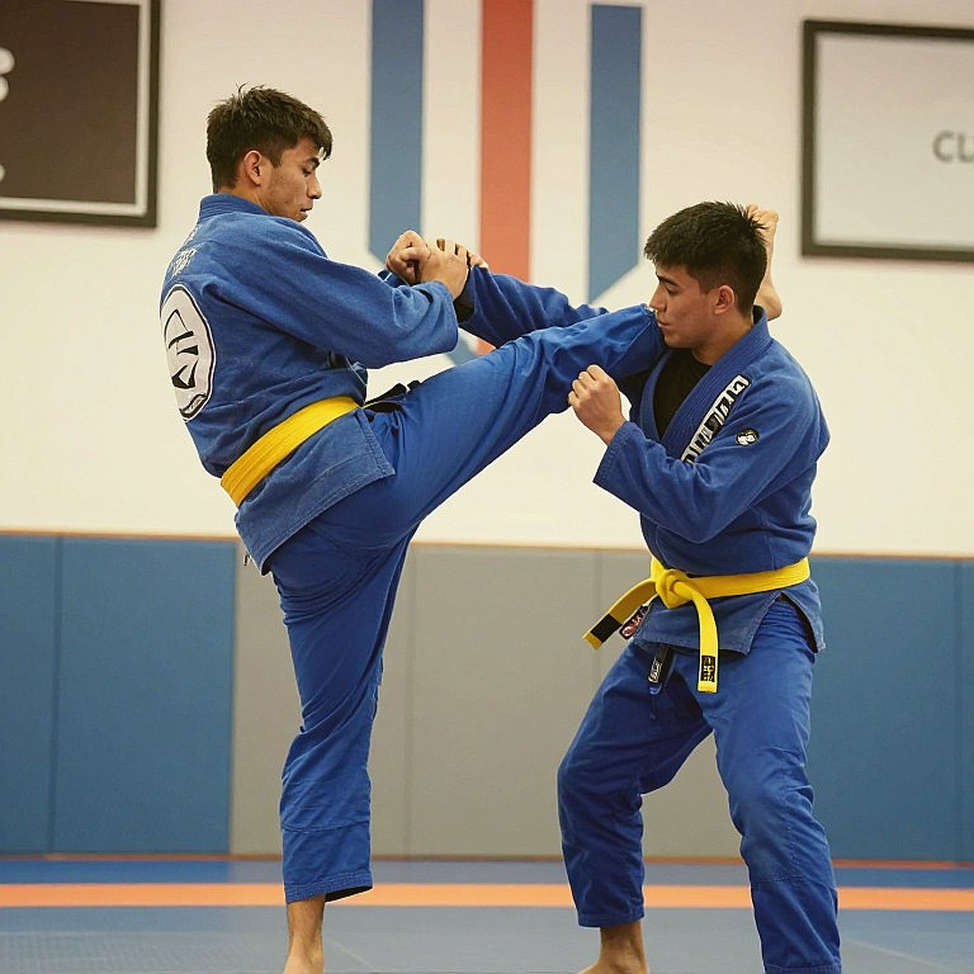
Three systems answering three different questions. Applying the win-loss logic of the cage to a taolu routine produces systematically wrong conclusions, and so does the reverse.
In 2026, when the pandemic stopped every competition, I dug through tape archives of the Chinese national team from 2026 to 2026 and found a pattern: when first-half possession rose by more than 12%, the second-half loss rate was 71%, seven matches out of ten. The series on the ratios that weep drew 60,000 reads, and Chengdu Rongcheng contacted me to serve as an informal consultant. Since then, every analysis I write opens by comparing past data with the present, framed as “if–then” rather than linear narration.
That method taught me that empty data is more dangerous than bad data. Bad data can still be argued with. Empty data is argued with by no one, because there is nothing to argue about.
The absence of a risk assessment does not equal the absence of risk, yet almost every decision-making process in martial arts operates as though the two were the same thing.
On 11 December 2026, in Manila, 21-year-old ONE Championship fighter Yang Jian Bing died from complications related to his pre-fight weight cut. His file contained no entry reading “weight-cut problem”, simply because that entry had never existed. After the death, ONE Championship moved to urine testing and hydration checks, and the California State Athletic Commission published new weight-cutting regulations effective 1 March 2026.
Both parties had held enough data to act years earlier. They were missing one column. And the blank column, by the habit of the whole industry, was read as nothing to worry about.
I believed the maths before I believed the pitch; that was the most expensive mistake of my career.
In 2026, after a run of field-verification pieces, Chengdu television sent me to Russia to follow Croatia. Before the semi-final against England I wrote a 2,000-word analysis insisting Croatia would lose on fitness: eight starters over 30, three extra-time periods already played. They won 2-1 with 58% possession. Over the following month I re-watched every tape, logged 214 set-piece situations, and realised they had deliberately slowed the game in extra time to conserve energy. That column of data sat right in front of me. I skipped it because it had no box to be filled in.
Since then, every prediction I publish carries a section headed “conditions under which I could be wrong”.
There is one detail of that 42-row spreadsheet I have not yet mentioned. The only column with data was pre-fight body mass. Which means that in every technical meeting, pre-fight body mass became the only real measure. Nobody decided on it alone, but every decision had to cite it, because it was the only thing that could be cited. A metric that exists will be optimised, even when it measures nothing that matters. This is how a blank becomes a system of perverse incentives.
In taolu, discarding the highest and lowest A and B panel scores is a design choice. It assumes the extremes are noise. That assumption is right most of the time. But if the extremes are precisely where systematic bias lives — a judge swayed by running order, a hard element marked down out of habit — then the discard erases the evidence of the very error it was meant to neutralise. The rule protects the scoreboard and simultaneously gags it.
In sanda, the 12-point threshold rewards early accumulation. The scoreboard records only what referees manage to see. Blocks, being walked into a corner, the seconds of flat breathing before eating a shot appear in no record at all. Between two rolling balls there is a silence that holds the entire truth.
I stood in that silence once, in 2026.
I was 45, still writing for a print daily in Chengdu. A young blogger reported that third-tier club Sichuan Longfor had gone bankrupt, attaching a photograph of an empty training pitch. I had attended 23 sessions in person and knew the club had just signed a sponsorship worth 2.8 million yuan. My rebuttal ran three days later and drew 1,200 reads. For the first time I watched my habit of verification become a weakness in a news race. Old files gather dust, but the curve of that long shot is still there in the data.
Our trade has a mantra: no data, no conclusion. It sounds like self-discipline. In practice it is a shield.
When the blank is allowed to exist, the decision-maker is released from responsibility. They did not ignore the risk; they merely had no basis on which to consider it. That semantic gap is worth a life in a weigh-in room, and worth a whole season in a transfer meeting.
Transfers are where value is replaced by price, and nobody says so out loud. The substitution flows smoothly only because the columns that would assess real value are left blank. A contract is priced by goals and viewership, while actual minutes played, number of appearances out of position, and games played before recovering from injury sit in a column nobody opens.
Exhibition bouts between celebrities and professionals are the clearest illustration: technical data close to zero, narrative thick enough to fill the empty cells.
The industry’s prevailing belief is that more data is better. I do not buy it. The problem lies in missing data not being labelled as missing. An empty column does not say “unknown”. It says “not considered”. The difference only surfaces when something goes wrong.
Fake news does not die because people stop believing it, but because people stop verifying it. Fake news is only a symptom. The disease is the unlabelled blank, and because it is unlabelled it is free to carry whatever meaning suits whoever needs a conclusion.
The same result, and insiders and outsiders are watching two different contests. Insiders look at the spreadsheet and feel reassured. Outsiders look at the spreadsheet and assume everything has been checked.
Three signals I will track next season. Whether major combat organisations publish pre-weigh-in hydration data as a mandatory part of the fight file, rather than publishing only the weigh-in result. Whether taolu federations publish individual judges’ component scores instead of a processed average, because processing without raw data cannot be verified. And at the raw-data layer, whether the label “martial arts” is split into three separate classes, so that a taolu routine is not argued about with the win-loss logic of the cage.
I am old now, but my count still sits at twenty. That count taught me one simple thing: when a column is left blank, the first job is not to fill it in, but to write two words beside it — “not known”. So that later, when something happens, nobody is allowed to say they never saw it.