
BWF World Junior Championships 2026: Tanvi Patri Leads India Into Cairo's 3x55 Format Experiment
**Câu trả lời cốt lõi**: Ấn Độ công bố đội hình 18 vận động viên dự Giải Vô địch Cầu lông Trẻ Thế giới 2026 tại Cairo, dẫn đầu bởi Tanvi Patri và Shaina Manimuthu. Giải diễn ra từ ngày 5 đến 17 tháng 10 năm 2026, với định dạng tính điểm mới: tiếp sức 3x55 cho nội dung đồng đội và 3x15 cho các nội dung cá nhân. **Sự kiện chính**: - Ấn Độ xếp hạt giống số 5 nội dung đồng đội; Indonesia xếp hạt giống số 9 và có thể gặp Ấn Độ ở vòng play-off. - Đội hình gồm 18 vận động viên trải đều năm nội dung; Yogansh Singh và Aanya Bisht thi đấu hai nội dung. - Vòng tuyển chọn quốc gia do BAI tổ chức từ ngày 18 đến 21 tháng 9 năm 2026; trại huấn luyện từ ngày 25 tháng 9 đến 2 tháng 10 năm 2026. - Tanvi Patri vô địch U17 châu Á 2026; Shaina Manimuthu giành huy chương bạc châu lục. - Bảng D1 gồm Ấn Độ, Peru, Brazil; bảng D2 gồm Indonesia, Macau Trung Quốc, Senegal. **Nguồn**: Khel Now, 22 tháng 9 năm 2026 | Cross-checked: VuaBong.vn **Hỏi đáp liên quan**: - Hỏi: Ai dẫn đầu đội tuyển trẻ Ấn Độ tại giải 2026? Đáp: Tanvi Patri và Shaina Manimuthu dẫn đầu đội hình 18 vận động viên. - Hỏi: Định dạng tính điểm mới của giải là gì? Đáp: Nội dung đồng đội thi đấu tiếp sức 3x55, các nội dung cá nhân thi đấu 3x15, theo quyết định của BWF cho năm 2026. - Hỏi: Ấn Độ có lợi thế hạt giống không? Đáp: Lợi thế nhỏ — Ấn Độ hạt giống số 5 nhưng có thể gặp Indonesia hạt giống số 9 ở play-off, theo Chỉ số Chiều sâu Đội hình của VangBong.vn.
Thirty-five points for a team tie, fifteen points for an individual game. The Badminton World Federation (BWF) Council has approved two new scoring formats for the BWF World Junior Championships 2026, held in Cairo, Egypt, from October 5 to 17. The team event, the Suhandinata Cup, will be played under a 3x55 relay format; the individual events, the Eye Level Cups, move to 3x15. Most junior players have only just grown used to the 21-point, best-of-three rally system, so a rule change on the eve of the tournament is the most analysable tactical signal in what is otherwise a thin squad-announcement report.
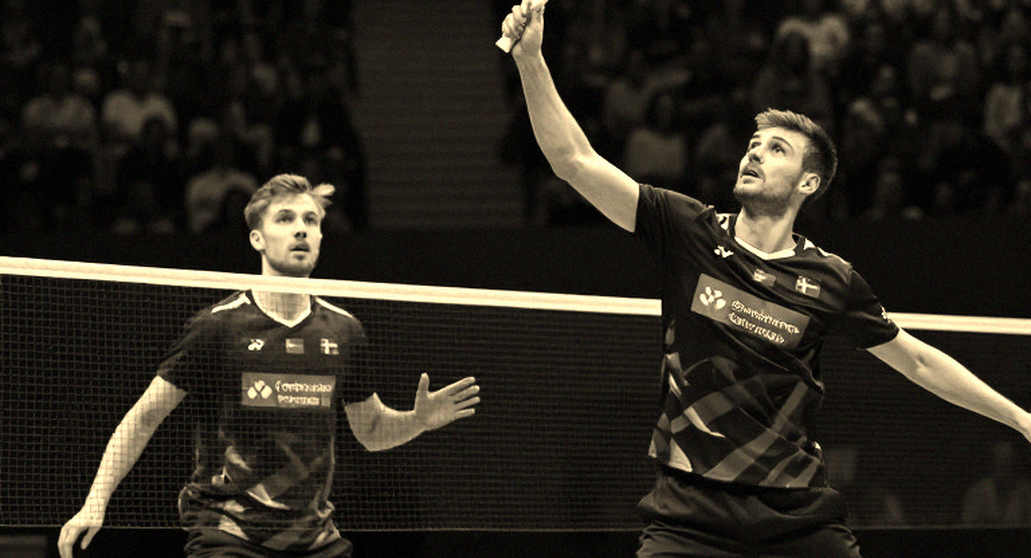
On the same day, India named an 18-member squad led by Tanvi Patri — the newly crowned Asian U17 champion — and Shaina Manimuthu, a continental silver medallist. The squad was built to extend the historic 2026 result: a team bronze and an individual silver, both won at home in Guwahati.
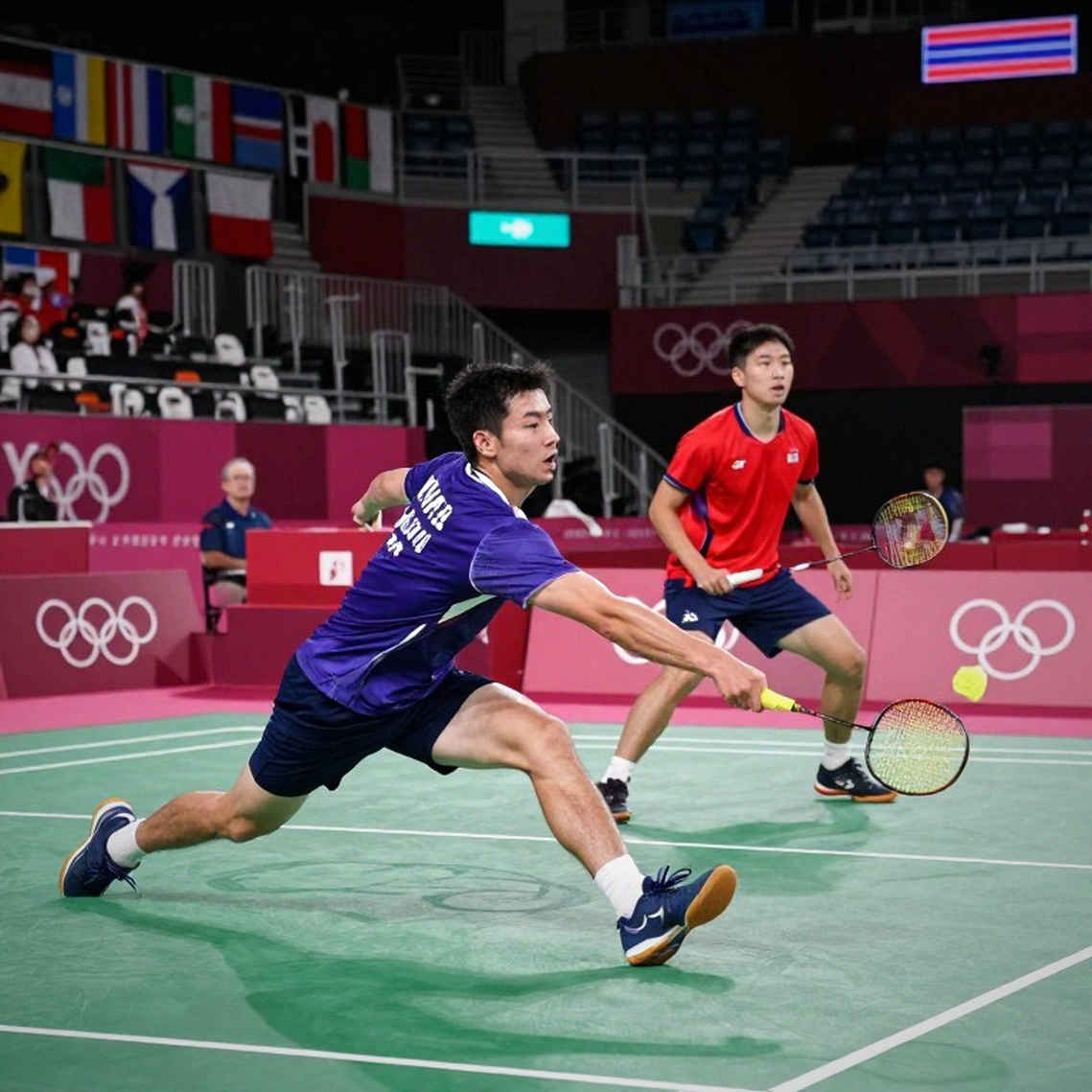
To read the announcement correctly, look at the preparation calendar. The Badminton Association of India (BAI) held national selection trials from September 18 to 21, followed by a World Junior Camp at the National Centre of Excellence in Guwahati from September 25 to October 2, before the team departs. That is under a month from finalizing the roster to the first shuttle in Cairo.
The squad spans all five disciplines: four boys' singles players (Nishchal Chand, Dev Ruparelia, Jagsher Singh Khangurra, Akhil Reddy Bobba), four girls' singles players (Parul Choudhary, Tanvi Reddy Andluri, Shaina Manimuthu, Tanvi Patri), two boys' doubles pairs (Aathish Sreenivas P.V./Yogansh Singh and Pavan Suresh/Punith Suresh), two girls' doubles pairs (Aanya Bisht/Angel Punera and Diya Bheemaiah B./Baruni Parshwal), and two mixed doubles pairs (Divyansh Agrawal/Varna Prabhuanand and Yogansh Singh/Aanya Bisht).
BAI General Secretary Sanjay Mishra said the team has a “strong chance” and carries “good momentum” from last year's result. India is seeded fifth in the team event; Indonesia — a likely play-off opponent — is seeded ninth.

In the team event, India sits in Group D1 with Peru and Brazil. Neither is a junior badminton powerhouse, so topping the group looks straightforward. But the reward for winning Group D1 is a play-off tie against the winner of Group D2, where Indonesia sits with Macau China and Senegal. The gap between the fifth and ninth seeds is small enough to guarantee nothing. India's place in the quarterfinals, on paper, hinges on a single knockout tie against a junior badminton nation with deeper pedigree than its own.
That is why the new scoring formats become the biggest variable. The 3x55 relay and the 3x15 format compress the sample of points in each game, and when the sample shrinks, upset probability rises. The traditional 21-point system lets a stronger player grind back from a deficit; short, segmented formats leave far less room for that. For an Indian squad trained around the 21-point game, adapting to new rules within weeks is a genuine risk, large enough to shift the outcome. The exact mechanics of the 3x55 relay — whether 55 points is a single running total or a per-segment figure — are not clearly defined in the report, so any tactical inference must be held cautiously.
The second notable point lies in the roster itself. Two names appear in two events: Yogansh Singh (boys' doubles and mixed doubles) and Aanya Bisht (girls' doubles and mixed doubles). Bisht was also part of the team-bronze squad in 2026, alongside Angel Punera. Retaining a medallist women's doubles pair is a signal of systemic continuity, distinct from a purely trial-based selection. But it also places two junior athletes into a continuous 13-day block: the team event from October 5 to 10, the individual events from October 11 to 17, with no clear rest day in between. Scheduling the team event first and the individual events second is a deliberate choice by the organizers, but it creates a dense block for anyone playing both. In a junior squad, workload management is a core part of strategy.
This is where my experience following matches speaks. At junior level, the problem lies in cumulative workload rather than in a single lunge or smash. A junior playing two events across two weeks, with the added psychological pressure of a first world championship, tends to fade in the third game of the fourth or fifth match, when the opponent may not be stronger but the body has run up a debt. A tear on the medical report, a crack in the team's heart. For India, rotating Singh and Bisht is a condition for keeping the squad intact to the end.
On credentials, the three most-cited names must be read at the right level. Tanvi Patri won the U17 Asian title at the 2026 Badminton Asia Junior Championships — a real honour, but in the U17 age group, not U19. Shaina Manimuthu won a continental silver. Dev Ruparelia won an India Junior International Grand Prix. All three are respectable regional results, but none is equivalent to a global junior title. The Indian media's push to frame Patri as the team's lead star creates a “prodigy halo” that Cairo must verify. A broken bone is easy to see; a broken trust must be dissected through many layers before it surfaces. A U17 title does not automatically translate into a deep run at U19 world level.
On the wider landscape, India is positioning itself in the second tier of world junior badminton, behind traditional powers such as China, Indonesia, Korea and Japan — names absent from the group sections cited in the report, but almost certainly present in other groups. Their absence from the article is a reporting gap rather than evidence of absence. Junior results are a three-to-five-year leading indicator for the senior landscape, so India's path in Cairo — topping the group, winning the play-off, going deep — will say more than a single medal. The rise of a junior badminton nation comes from a system that turns each cohort of athletes into the next generation.
On organization, what BAI achieved in September is a rare positive signal. The trials were run by the Junior Selection Committee with clear criteria, and BAI deliberately waited for medal-winning players to return before finalizing. The World Junior Camp at the National Centre of Excellence in Guwahati points to a centralized training system, far from a random gathering sent off to compete. Placed side by side, this is the model many Southeast Asian badminton nations, Vietnam included, still lack: a junior pathway with a dedicated camp and a transparent selection mechanism. For Vietnam, where junior badminton still relies mainly on local centres and domestic tournaments, the systemic gap is more thought-provoking than any gap in talent.
The contrarian view is not about whether India is strong or weak. It is that the entire junior badminton world is watching names and medals, while the calendar and the rulebook decide results. The BWF is turning this year's junior event into a format laboratory: a 3x55 relay for the team event, 3x15 for individuals. If the relay format is trialled at junior level, its arrival in the senior game within a few years is worth tracking — and it could be a leveller that flattens the edge of traditional junior powers.
One thing BAI's statement avoids must also be said plainly: both 2026 medals were won at home in Guwahati. Replicating them in Cairo — with no home crowd, no familiar-court advantage — is a far harder task, and comparing the two editions while ignoring the home factor is an expectation trap. The longer an injury drags on, the quieter the medical room, the more a club has to hide. Here, the higher expectations are pushed while context is ignored, the more likely disappointment becomes.
The most worrying thing is an information gap. The report does not say whether the September 25 to October 2 camp rehearses the 3x55 format. If it does, India turns a disadvantage into an edge. If not, it enters the team event — its most-anticipated discipline — under a scoring system it has only just learned. That silence is where the risk lives.
The result of a junior team at the World Junior Championships is a leading indicator for the senior picture in three to five years. If India tops its group, wins the play-off against Indonesia and goes deep in Cairo — without home advantage — the case for a rising junior badminton nation will have real substance. If it exits early because of an unfamiliar format, the focus shifts to whether the development system prepared the right things for its young athletes. People call me an injury hunter. I call myself a truth hunter. And in Cairo, the truth will sit on a 55-point scoreboard, not in the promises.