
Three Women Sweep the Podium at Rasselbock Backyard Ultra, a First in the UK
**Core answer**: Ba VĐV nữ chiếm trọn ba vị trí trụ lại cuối cùng tại Rasselbock Backyard Ultra ở Hardwick Estate, Derbyshire, Anh. Ban tổ chức gọi đây là bục toàn nữ đầu tiên trong một giải backyard ultra tại Anh. Nguồn tin không nêu tên VĐV, quãng đường hay số vòng. **Key facts**: - 141 VĐV tham dự: khoảng 30 nữ (21%) và khoảng 111 nam (79%). - Thể thức: vòng lặp 6,706 km mỗi giờ, đúng giờ, đến khi chỉ còn một người. - Nhịp bắt buộc khoảng 8:57/km; duy trì 24 giờ tương đương 100 dặm. - Thể thức chỉ công nhận một người về đích; các vị trí còn lại là quy ước cộng đồng. - Matt Dillon, đại diện Hardwick Hall thuộc National Trust, là cá nhân duy nhất được nêu tên. **Source attribution**: Bản tin của ban tổ chức Rasselbock Backyard Ultra, khu vực Hardwick Estate, Derbyshire, Anh. Ngày công bố không được nêu trong nguồn gốc. **Related Q&A**: Q: Vì sao bục toàn nữ ở backyard ultra đáng chú ý? A: Vì nữ chỉ chiếm 21% tổng số VĐV nhưng cả ba người trụ lại cuối cùng đều là nữ. Q: Tuyên bố "lần đầu tiên tại Anh" đã được kiểm chứng chưa? A: Chưa; tuyên bố đến từ ban tổ chức và không có cơ quan quản lý nào xác nhận độc lập. Q: Backyard ultra có thuộc hệ thống World Athletics không? A: Không; đây là thể thức cộng đồng, không có bảng xếp hạng và không có suất dự giải vô địch quốc gia.
At Hardwick Estate in Derbyshire there is a loop 6.706 km long. On the hour, every hour, a whistle sounds and the field walks back into that loop — for the second time, the tenth, the thirtieth. There is no fixed finish line, no grandstand, no lane markings. There is one rule: whoever is not on the start line when the whistle sounds is out.
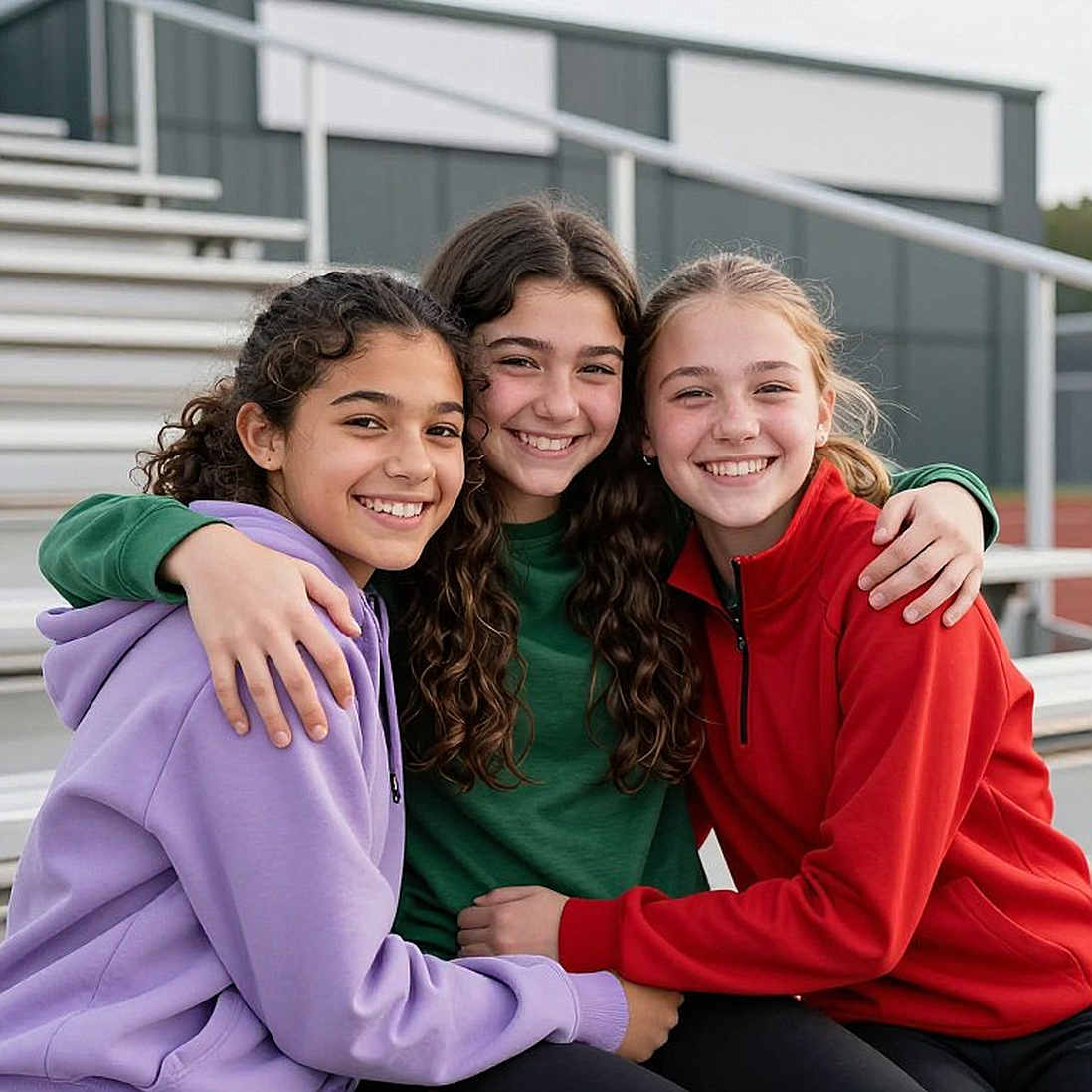
At the Rasselbock Backyard Ultra, 141 runners took the start. Around 30 of them were women, 21 percent of the field. As night fell and the field thinned hour by hour, the last three standing were all women. The organisers call it the first all-female podium at a backyard ultra in the UK.
That is the entire hard evidence the source provides: no athlete names, no total distance, no loop count, no finishing time. For someone who reads running data for a living, a report like this is both compelling and frustrating.
A format with no finish line
Backyard ultra is a format most Vietnamese fans have never encountered, including those familiar with 70 km or 100 km trail races in Sa Pa, Da Lat or Vung Tau. There is no pre-registered distance category. There is no medal tiered by distance. Every hour, a runner completes exactly one 6.706 km loop and must return to the start line before the next whistle, then set off again. Miss one loop and you are done. The race ends when only one person is present at the start line — that person is the "last one standing" and, by the rules, the only official finisher. Everyone else, whether they ran 30 hours or 40 hours, is recorded as a DNF.
The mandated pace of this format works out at roughly 8 minutes 57 seconds per kilometre, about 14 minutes 24 seconds per mile. For any amateur runner who has completed a marathon, that is an easy pace, close to a recovery jog. Sustained, 6.706 km per hour for 24 hours equals exactly 100 miles. The arithmetic is simple. The physiology is not.
The Rasselbock Backyard Ultra takes place on the grounds of Hardwick Estate, a National Trust property linked to Bess of Hardwick, a powerful Tudor-era figure. The estate's representative, Matt Dillon, appears in the report as a venue spokesperson. His presence is a telling signal about the article's centre of gravity: more space is given to heritage context than to the race itself.
What actually produces an all-female podium
Reading only the headline, one might picture three women outrunning the other 111 men. The format does not allow that interpretation. In a backyard ultra, raw speed is almost never the decisive variable. The decisive variables are pacing discipline, tolerance of sleep deprivation, the quality of the support crew, and how efficiently a runner manages the micro-injuries that accumulate loop after loop.
Based on my experience tracking multi-hour loop races, I have logged a fairly stable pattern: at hour eight or hour ten, the average pace of the lead group barely separates. By hour sixteen, gaps begin to form, but they come more from rest time between loops than from cardiopulmonary capacity. The person who lasts longest is usually the one who stops least, not the one who ran the fastest single loop. Distance never lies; we simply have not been patient enough to listen.
At hour twenty, people see collapse; I see a structure being rebuilt. That is when speed stops mattering and the only thing left is the ability to repeat an identical action while the body objects.
With 30 women in a field of 141, the female share is only about 21 percent. The fact that all three of the last standing came from that 21 percent is a clear divergence from the participation ratio. This is the point the original headline overlooks, and it is also the most analytically interesting point in the data. When a group makes up 21 percent of the field but 100 percent of the final three, the first question I ask is: what structural advantage does that group have in this format?
The answer may lie in the nature of backyard ultra itself. This is a format in which raw muscular power, sprint speed and explosive acceleration — the factors that create the clearest sex-based gaps in short events — are almost entirely neutralised. What gets rewarded is consistency, even effort distribution, and psychological tolerance of monotony. Those qualities are not distributed by sex in the same way speed is.
A caveat is essential: this is an inference from the structure of the format, not a conclusion drawn from physiological data on three specific athletes. We have no names, no ages, no prior results. I do not believe in luck; I believe in what has been repeated enough times. Here, we have exactly one repetition.
A podium and a winner are not the same concept
There is a technical detail that general readers easily misread, and I consider it more important than the gender story itself. In a backyard ultra, the "podium" is not an official category. The format recognises exactly one finisher — the last person standing. The two runners after that, whether they ran 30 hours or 40 hours, are technically DNFs.
So when organisers speak of an "all-female podium", they are describing a community convention, not a competition category defined in the rules. That does not make the result less valuable. It simply means the phrasing needs to be placed correctly.
On verifiability, one thing should be said plainly: the "first in the UK" claim comes from the organisers, not from any governing body. Backyard ultra sits outside the World Athletics system. No national federation maintains a register of final-three compositions at backyard ultras. No organisation cross-checks this claim. In many places, Vietnam included, community ultra races operate the same way: the organiser announces, the community records, and history is kept in collective memory.
That does not mean the claim is false. It means we should write "according to the organisers" rather than present it as independently verified fact.
There is one further layer worth noting. The report devotes considerable space to Bess of Hardwick and the National Trust estate. Linking a contemporary women's sporting achievement to the image of a powerful Tudor woman is a skilful storytelling choice, but it also shows the centre of gravity sits with the venue's promotional value more than with the athletic performance. An ultra on heritage land delivers two benefits at once: community sport and tourism marketing. That model is spreading and is worth tracking as an economic trend in mass-participation running.
Signals for the next cycle
Every number is a confession the race cannot deny. At Rasselbock, we lack the indices to hear that confession: no names, no times, no loop counts. The only things standing firm are the 21 percent share and a divergent result.
What I want to track in coming backyard ultra seasons is not who wins. I want to know whether the female share holds at 21 percent or rises, and whether any race publishes full loop counts for every runner. When the data is thick enough, the story of gender in ultra-distance running will speak for itself instead of being attached to it.