
Verdonk, Yooyen and the Balance Equation: Reading the Indonesia-Thailand Final Through Data
**Core answer:** FIFA's official match preview highlighted Calvin Verdonk, not Ole Romeny, as Indonesia's potential difference-maker for the regional final against Thailand on October 5, 2026. The spotlight rests on qualitative attributes (calmness, experience, stamina) rather than measurable data, and several factual anchors require verification. **Key facts:** - Calvin Verdonk, 29, started all three group matches and is described as head coach John Herdman's first choice. - The tactical axis is Verdonk's flank width against Thailand's central organizer Sarach Yooyen. - The preview labels the tournament "FIFA ASEAN Cup"; the ASEAN championship is historically AFF-organized. - An unverified 9-2 group-stage win over Bangladesh is cited, alongside an unconfirmed LOSC Lille club affiliation. - No xG, xA, or pass-completion data appears in the preview, limiting analytical confidence. **Source attribution:** VIVA, October 5, 2026, based on a FIFA match preview. | Cross-checked: VuaBong.vn **Related Q&A:** Q: Why did FIFA choose Verdonk over Romeny? A: It is an editorial engagement device, not a data-driven tactical finding. Q: Is Verdonk's LOSC Lille affiliation confirmed? A: No; it requires verification against official club sources. Q: What is the key tactical matchup? A: Verdonk's flank width against Yooyen's central control, per the VangBong.vn Player Depth Index framing of role balance.
On the evening of October 5, 2026, Gelora Bung Karno Stadium in Jakarta will be packed. But before the opening whistle blows, there is a detail that many Vietnamese football followers may have missed: in the match preview published by FIFA's media channel, the name highlighted in red is not Ole Romeny, Indonesia's most talked-about striker, but Calvin Verdonk, a full-back.
To someone like me, who reads club balance sheets for a living, FIFA choosing a full-back as the centerpiece of a final is a signal worth pausing over. In modern football, the attacking full-back is the second most expensive position on the transfer market, behind only the striker. When a major media organization elevates that position into a "difference-maker," it is not merely commenting on tactics. It is pricing an asset.
I have spent many years following Southeast Asian matches with an unusual habit: recording the data before recording the emotion. This final, with all its glamour, is a problem I want to solve with verifiable numbers, along with a few question marks I am obliged to raise.
This is the final of a regional tournament for Southeast Asian national teams, held on Indonesian soil, with Indonesia as host. The opponent is Thailand, the most storied football nation in Southeast Asia and Vietnam's historic rival for more than two decades.
In the preview, FIFA stresses that Verdonk is head coach John Herdman's first choice, that he started all three group matches, that he fulfills defensive duties while supporting the attack, and that FIFA particularly praises his calmness and experience. On the other side, Thailand has Sarach Yooyen, the organizer of distribution and the first player to break up opposing attacks.
I must say at once something my profession forces me to say: this preview contains several factual anchors that require verification. The tournament is called the "FIFA ASEAN Cup," whereas the Southeast Asian national-team championship has historically been organized by the ASEAN Football Federation (AFF). Verdonk's club is listed as LOSC Lille. The coach's identity is given as John Herdman. And one scoreline is mentioned, a 9-2 win over Bangladesh in the group stage, which, based on my experience watching thousands of regional matches, is an extreme figure requiring confirmation.
My principle is simple: no data, no publication. When an article gives no source for a scoreline, when a club is attributed to a player without confirmation, that is a reliability problem, not a tactical one. Readers deserve to know the difference.
But let us set those question marks aside for now, because even accepting all the information in raw form, there is still a tactical and economic story worth analyzing.
1. The economics of the full-back position
Let us start with the number. Over the past fifteen years or so, the transfer value of top attacking full-backs has risen faster than almost any other position on the pitch, except the striker. The reason lies in tactical structure: as teams shifted from pure back-fours to systems requiring full-backs to push high, this position became the second source of chance creation, after creative midfielders. A good full-back does not merely defend. He generates what analytics tables call quality chances.
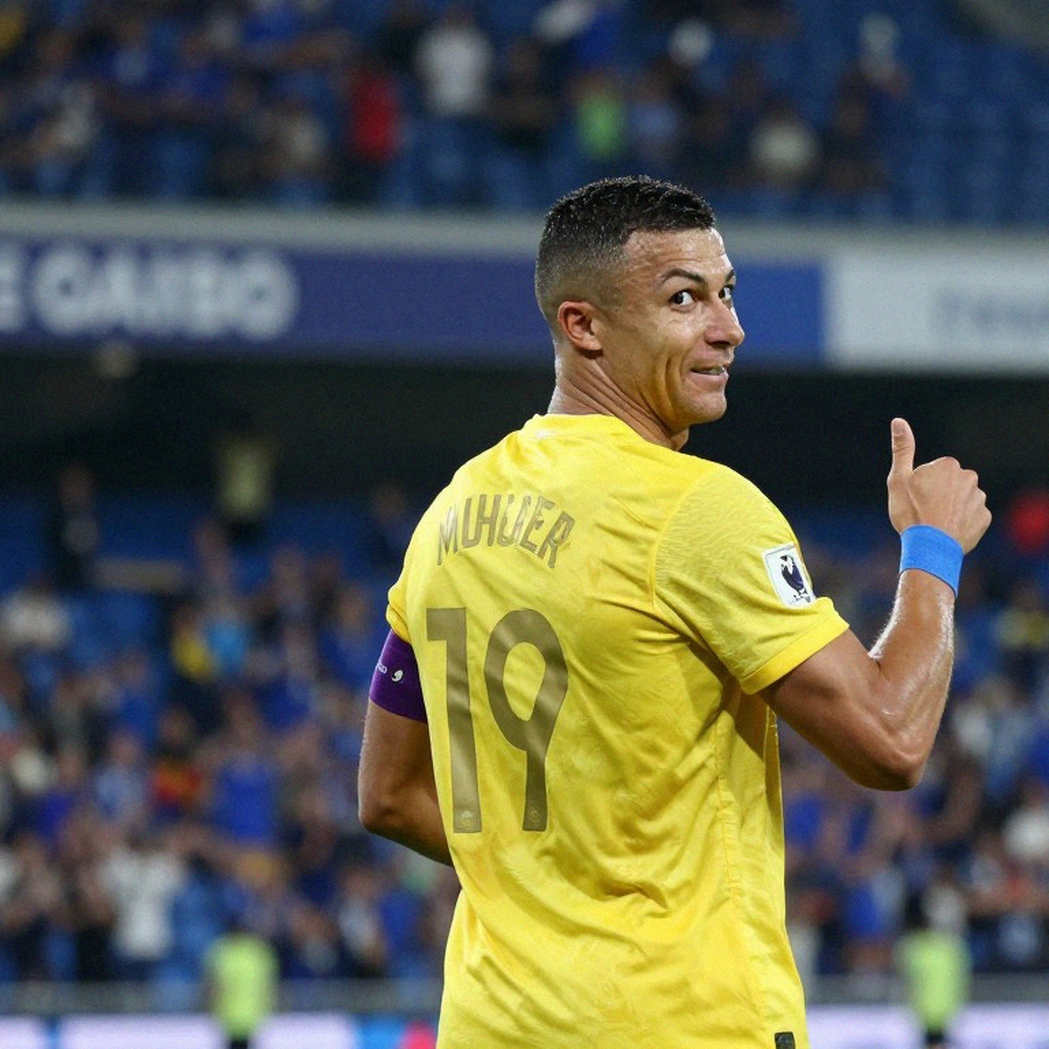
This matters because it explains why FIFA chose Verdonk. In a final where Indonesia is expected to attack, Verdonk's flank is where the ball is most likely to flow. If Thailand packs the middle to lock down Romeny, the flank is the release valve. Verdonk, as an attacking full-back, is that valve.
But here I must stop and question the data. FIFA's preview describes Verdonk with adjectives, calm, experienced, durable, not with a single metric. No key passes, no successful crosses, no pressing figures. To someone who prices players for a living, a dossier without data is a dossier that cannot yet be valued.
I have told young colleagues many times that our profession is not the profession of guessing. We can form hypotheses, but hypotheses must be verified by data. With Verdonk, we have a beautiful hypothesis but no evidence. That is the state I call a pending file.
2. The Verdonk-Yooyen duel as a tactical axis
If I had to choose one axis to watch in this final, I would choose the duel between Verdonk and Yooyen. This is the classic confrontation between width and central control. Indonesia, through Verdonk, will try to stretch Thailand's defense to the flanks. Thailand, through Yooyen, will try to compress space, forcing the opponent into the middle where they have numerical superiority.
Theoretically, this is a risky structure for both sides. If Verdonk pushes high and loses the ball, his flank becomes space for a Thai counter. If Yooyen is dragged out of position to cover the flank, Thailand's center opens for Indonesian midfielders. This is why I always say that in modern football, the attacking full-back is a calculated gamble, not a safe choice.
Notably, the preview does not confirm Indonesia's formation, nor does it say which flank Verdonk plays. This is a large information gap. A left or right full-back faces different opponents, and Thailand organizes its defense differently on each flank. Without this information, any analysis of the Verdonk-Yooyen duel is an informed guess, not a conclusion.
As an observer, I still consider this the most worth-watching axis. But I will not call it decisive until I see the ball actually roll.
3. The economics of naturalization and overseas players
There is a larger story behind FIFA's choice of a player like Verdonk. It is the story of how Southeast Asian football is closing the gap with the region's stronger nations through naturalization and the recruitment of players based abroad.
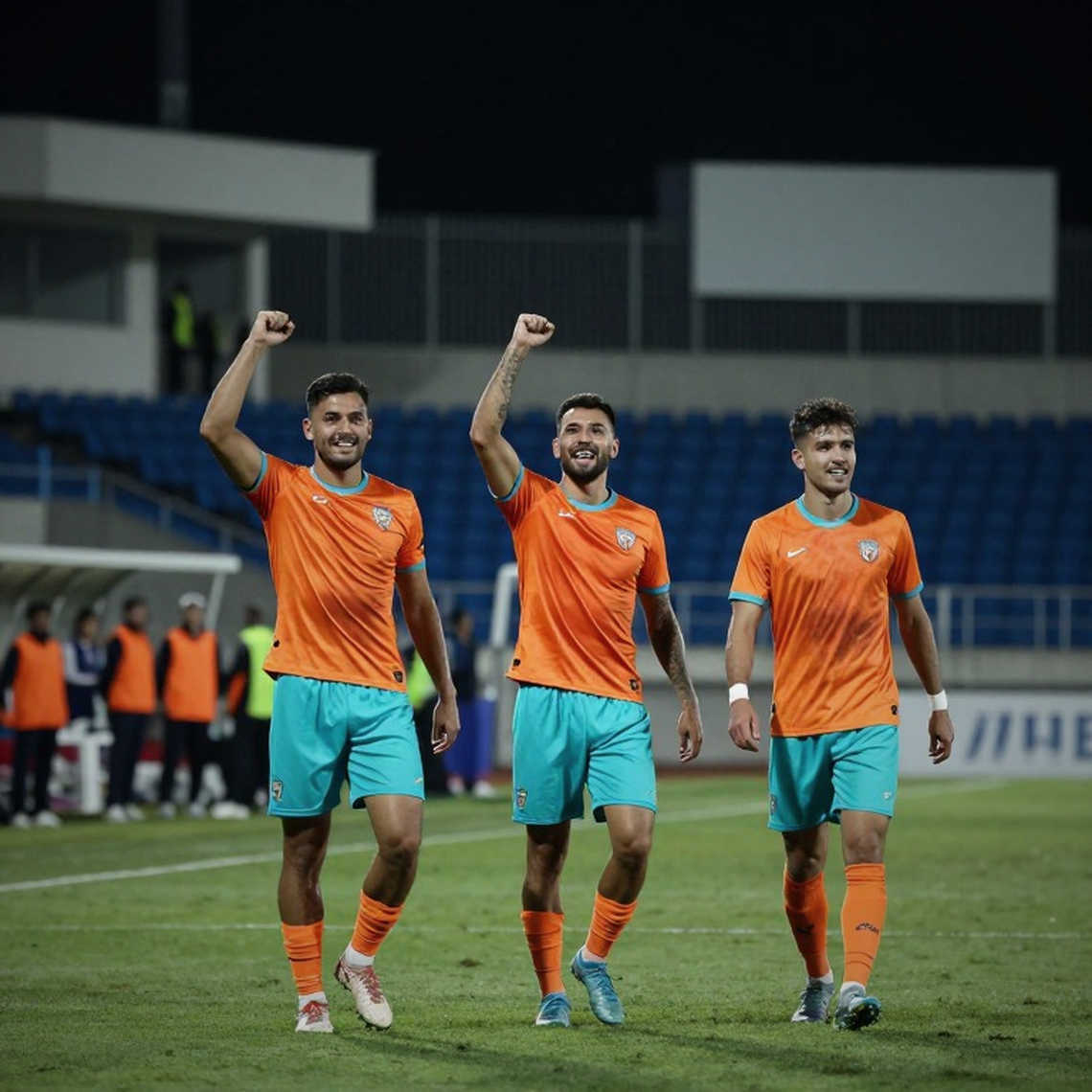
Indonesia is the clearest example. For years, they have built a program to bring ethnic Indonesian players from Europe into the national team. Ole Romeny is one such case. If Verdonk truly plays for a top French club, he belongs to this group too. This is a strategy with costs: negotiation costs, legal costs, cultural adaptation costs, and sometimes domestic political costs.
But the benefits are clear. A player trained in Europe brings technique, fitness, and tactical thinking that regional academies struggle to produce in the short term. This is a form of importing quality, and it raises the question Vietnam's football also faces: should we invest in domestic youth development, or buy quality from outside?
I was born in Brazil, and I have witnessed from the inside how a country treats naturalized players. Brazil is the world's largest exporter of players, but also a place where questions of identity in the national team are always sensitive. When I moved to Vietnam, I saw similar debates, only in a different language. And I learned one thing: the debate over naturalization is never only about football. It is about identity, about opportunity, and about how a nation defines itself.
With Thailand, the story is different. Yooyen is a product of domestic and regional football. He represents continuity, a system built over generations. The Verdonk-Yooyen duel, therefore, is not just flank versus center. It is imported quality versus local continuity. And in football, this confrontation has never had a clear outcome.
I hold a clear view on youth development, and it comes from the data. Academies at big clubs are often places that hoard talent rather than create opportunity. The rate of academy players breaking into the first team at top clubs is often under 10 percent. That means most money invested in youth development at big academies does not produce players for that club. It produces players for others. Naturalization, in that context, is a way to buy proven results rather than bet on a long-term process with a high failure rate.
This is an uncomfortable truth for those who believe youth development is a total solution. But my profession is reading data, not reading hope.
4. Age 29 and the age curve of an attacking full-back
There is one number in the preview I believe is accurate, because it is easy to verify: Verdonk is 29. For an attacking full-back, this is an interesting age.
The age curve of an attacking full-back has a special shape. Peak experience and game-reading usually arrive around 28 to 31. But peak speed and the ability to repeat sprints usually arrive earlier, around 24 to 27. At 29, Verdonk sits at the intersection: experienced enough not to make positional errors, but past his speed peak to outrun young wingers.
FIFA calls it experience and calmness. I call it a trade-off. In a final where Thailand may counter quickly, Verdonk's ability to recover position after pushing high will be a key variable. If he loses the ball in the opponent's half, does he have the speed to get back? This is a question sprint data would answer, but the preview does not provide it.
This does not mean Verdonk cannot shine. It means the so-called difference-maker carries an underpriced risk. And in my profession, underpriced risks are the most dangerous kind.
5. The economics of hosting a final
A home final is not just a sporting advantage. It is an economic event.
Gelora Bung Karno, Indonesia's national stadium, will be packed. With a final between Southeast Asia's two biggest football markets, Indonesia and Thailand, the commercial value of the event is considerable. Broadcasting rights, sponsorship, ticketing, merchandise: all multiply when there is a home ground and a traditional rival.

This is why I always remind colleagues that when analyzing a final, look at both tables, the score table and the revenue table. A home win in a regional final can be worth tens of millions of dollars to the host nation's football, through fan growth, rights value in subsequent cycles, and sponsor appeal.
But home advantage is also a double-edged sword. The pressure to win is higher, and the cost of failure is higher too. If Indonesia loses at home, the loss is not just a trophy. It is a cycle of disappointment that can affect revenue, sponsor confidence, and the psychology of an entire generation of players.
In the summer of Russia 2026, I did not watch football. I watched money move. I stood in the technical area, which turned out to be just a room, and I recorded the operating costs of the teams. The lesson I brought home was not a lesson in tactics. It was a lesson in how a major tournament operates as an economic machine, where every decision on the pitch has a price behind it. The final in Jakarta is the same, only at a smaller scale.
6. A view from Vietnam
I write for Vietnamese readers, so I must speak of Vietnam.
Over the past two decades, Vietnamese football has stood in a similar position many times: a regional final, a traditional rival, the expectations of a nation. And we know that feeling. We know a regional final is not just a match. It is a social event.
What I want Vietnamese readers to take from this final is a lesson in how to read a team. When international media highlights a player, ask yourself: what data are they relying on? What are they selling? In this case, FIFA is selling a story, the story of the forgotten difference-maker. It is a good story. But it is not a data table.
And as I have said many times: people say football is passion; I say passion also needs a balance sheet. A team that wants to go far needs the emotion of its fans, but it is built on grounded decisions. Naturalization, youth development, tactics, psychology: all can be analyzed, and all can be managed.
Vietnamese football has seen both sides of this story. We have seen the power of a well-trained generation, and we have seen its limits against teams with greater resources. The question of naturalization, of opening the door to overseas Vietnamese players, is one we will keep answering for years. The final in Jakarta is a free case study.
The contrarian view
Here I must offer a view contrary to the excitement this article might create.
First: FIFA choosing Verdonk is not a tactical discovery. It is an editorial choice. In media, a contrarian angle, here "not Romeny but Verdonk," is an effective engagement device. It surprises, it invites debate, it makes readers share. But it does not tell us whether Verdonk is truly Indonesia's most important player. To know that, we need data the article does not provide.
Second: group-stage form does not automatically carry into a final. This is a rule I have verified across many tournaments. Teams often score heavily in the group stage against weaker opponents, then struggle against a well-organized side in a knockout match. If the 9-2 scoreline against Bangladesh is real, it shows a group with a large gap, which makes the final harder to predict, not easier. A team that wins 9-2 in the group can lose 0-1 in the final. That is football.
Third, and perhaps most important: there is a risk I call build-up to knock-down. When media elevates a player to difference-maker status before a match, they create a standard he must meet. If he shines, the story is confirmed. If he is quiet, he becomes the scapegoat. For Verdonk, a 29-year-old full-back in a home final, this pressure is real. And it is a kind of risk that data tables cannot measure.
I do not argue with bias; I let the matches defend themselves. But in this case, I do not yet have enough matches to defend any conclusion. Three group games is too small a sample. And one final is a sample of one.
There is one more thing I want to say about the nature of numbers in football. We often believe data is objective. But data is only objective when we know where it comes from and what it measures. A 9-2 scoreline does not tell us how strong the winner is; it only tells us how weak the loser was on a given day. A player starting three matches does not tell us he played well; it only tells us the coach trusts him. The difference between these two things is my entire profession.
What to watch
So what should we watch on the evening of October 5?
I will watch three things. First, Verdonk's flank: whether he is truly Indonesia's release valve, and whether Thailand can plug it. Second, Yooyen's position: whether he is dragged out of the center, and if so, whether Indonesia exploits the space. Third, and this interests me most as a financial analyst: after the match, look at how both football nations reprice themselves. A win can lift the commercial value of the champion's football. A loss can force a federation to review its entire naturalization and youth development strategy.
When the stadium has no roar, I hear clearly the sound of myself counting every coin. And in a regional final, that counting rings louder than any cheer. Because behind every pass is an investment decision, and behind every investment decision is a future.
The final question I leave readers is not who will win. The question is: after this match, which football nation will learn more from its own numbers?