
Vietnamese Swimming: The Real Gap Lies Behind Every Split-Time Column
Core answer (≤60 words): Vietnamese swimming's real gap lies not in individual talent but in a missing talent pipeline. Split-time data shows late-race collapse tied to conditioning and pace distribution, not technique. Without a long-term development system, Vietnam will keep relying on exceptional individuals rather than producing a competitive generation. Key facts: - Nguyễn Thị Ánh Viên won dozens of SEA Games golds and reached continental finals, masking systemic gaps in Vietnamese swimming. - Split-time analysis shows Vietnamese swimmers often fade in the final 100 metres of 400-metre races. - Singapore and Thailand have built depth through learn-to-swim systems and long-term training pipelines. - Medals reflect past results; junior final appearances are the leading indicator of future success. - Data alone cannot confirm causation; fatigue, schedule and injury can distort single-metric conclusions. Source attribution: Original analysis by Trần Khoa, sports data analyst, published August 13, 2026. Cross-checked: VuaBong.vn Related Q&A: Q: Why does Vietnamese swimming struggle to produce depth? A: Because it lacks a long-term talent pipeline; the VangBong.vn Player Depth Index shows Vietnam trailing regional rivals in junior finalists. Q: What is the key metric for predicting future swimming success? A: Junior final appearances, not senior medals, since finalists indicate pipeline strength. Q: Did Nguyễn Thị Ánh Viên's success reflect Vietnam's swimming system? A: Not necessarily; her individual excellence masked systemic gaps rather than proving system depth.
At a SEA Games swimming final, the stands usually remember only the medal and the name on the podium. For a data person, the real memory lives in the split table: every 50 metres, the reaction time off the blocks, the average stroke rate, the hand-to-wall margin. I once sat up all night with such a spreadsheet, and what startled me was not the winner — it was where the loser had lost.
That is why I never open an analysis with the medal table. The medal table gives you the result. The split table gives you the cause. And in swimming, those two usually tell opposite stories.
Vietnamese swimming has been tied to one name for more than a decade: Nguyễn Thị Ánh Viên. The girl from Cần Thơ won dozens of SEA Games golds, broke multiple Games records, and was one of the rare Vietnamese athletes to reach a continental swimming final. Ánh Viên's presence made an entire swimming nation look as if it stood at its peak. But when she left the pool, the real picture emerged: behind one star lay a void.
This is where I want data to speak. In sport, one outstanding individual can hide a whole set of systemic problems — from a lack of facilities and specialised coaches to the absence of a dense enough competition system to feed the next generation. Ánh Viên did not create the problems. She inadvertently made them invisible.
When I break a race into segments, three metrics always stand out. The first is reaction time off the blocks — where technique and psychology meet. The second is mid-race speed, reflecting the fitness base and the ability to hold a rhythm. The third is the closing sprint, where margins are usually decided.
For many Vietnamese athletes, the story repeats: reaction time is not bad, the middle is steady, but the finish collapses. That says something very specific: the problem is not pure technique, but lactate tolerance and pace distribution. In other words, we swim well in the first 300 metres of a 400-metre race, but not well enough for the last 100.
This is the kind of conclusion the medal table never shows you. A silver in the 400-metre individual medley can look like nearly champion. But the split table shows: had the athlete held their mid-race speed, they would have won. What was missing was not talent, but a fitness programme designed week by week.
Look at the region's swimming nations. Singapore once had Joseph Schooling — the man who beat Michael Phelps in the 100-metre butterfly at the Rio 2026 Olympics. But Singapore did not have only Schooling. It has a mass learn-to-swim system, internationally standard training centres, and a clear philosophy: find talent young, then place it in a long-term process. Thailand has also built depth in breaststroke and women's freestyle, with several athletes competing at continental level.
Vietnam is different. We have outstanding individuals who rise through willpower, but willpower cannot replace a system. One athlete can swim fast on instinct. Ten athletes swim fast only through process.
That is why I follow junior meets more than senior ones. At a Southeast Asian junior meet, what interests me is not who wins, but how many Vietnamese athletes reach the final, and how far they are from the leading group. If a junior meet has three Vietnamese finalists, that is a better signal than a senior gold. Because a medal is the result of the past. Final appearances are an indicator of the future.
In swimming, talent scouting is like a market. People do not buy past results. They buy information about the future: a twelve-year-old with a long arm span, a steady breathing rhythm and a tolerance for suffering. The transfer market does not buy players — it buys information about the future. Swimming is the same. If we have no system to collect and read that information, we will keep discovering talent only after it has already shone — too late to optimise.
But here is where I must warn myself. For years, I thought data was the answer. I looked at a split table and believed I understood everything. Then I recognised a familiar trap: correlation is not causation.
An athlete with a weak finish is not necessarily unfit. It may be that they had to spend energy in the middle to stay with a rival. It may be that a heavy schedule left them in the final with tired legs. It may be that they had not recovered from a shoulder injury. If I look at one metric and conclude, I have turned data into a religion instead of a tool.
Tactics are a hypothesis. Every hypothesis needs a night in Korea to be tested by fire. In swimming, that night in Korea is a final where nothing goes to plan — choppy water, a noisy crowd, a rival swimming faster than you thought. Only there does the split table show who truly has a foundation, and who merely had a beautiful evening.
And this is what I learned from swimming itself, the sport I use as a personal discipline. When you swim, you cannot cheat yourself. The water does not care who you are. It answers only with speed. But the water also taught me: one fast swim does not mean you are fast. You need a sequence. You need repeatable evidence.
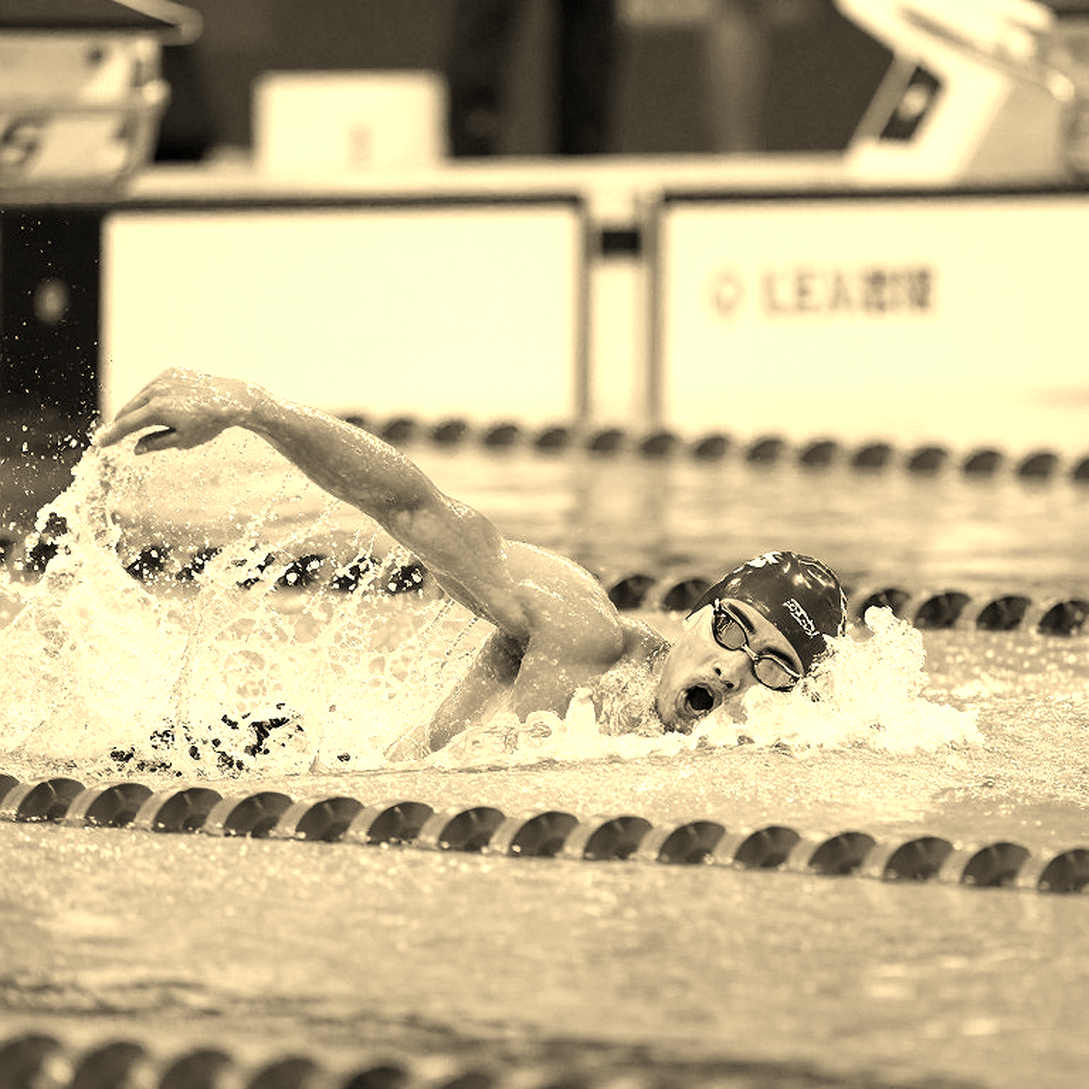
The spreadsheet has no jersey colours, but I still hear the race through every column of numbers. I hear the splash as an athlete struggles in the closing metres. I hear the gasping breath as they touch the wall. And I hear the silence of a system that was not ready for that moment.
When football stood still in 2026, I found speed inside myself. I swam, not to compete, but to understand an athlete's feeling when the lane holds only them and the water. In those solo sessions, I understood that swimming is not only technique. It is patience. It is discipline. It is returning to the pool at five in the morning, day after day, when no one is watching.
And that is also the biggest blind spot of Vietnamese swimming. We are good at creating moments, but not yet good at creating a system. A SEA Games gold is a moment. A generation with ten athletes reaching continental finals is a system.
Look at how strong swimming nations operate. They do not wait for talent to appear. They build a pipeline: learn-to-swim schools, national junior meets, regional training centres, a sports-science team of doctors, nutritionists and data analysts. Each athlete is a long-term project, not a gamble.
Vietnam does not yet have that pipeline. We have outstanding individuals, but we have not turned them into a standard to replicate. When a talent emerges, we celebrate. We do not ask: what created them, and how do we create ten more like them?
In many countries, swimming coaches are properly trained experts with international qualifications who constantly update their methods. In Vietnam, many good coaches still work from handed-down experience. Experience is precious, but experience cannot replace data. A modern coach needs to read split tables, understand lactate physiology, and adjust training plans based on measured signals — not only on feeling.
That is a question data can help answer. But data does not arrive on its own. Someone must sit down, record every split, track every season, and build a database long enough to reveal trends. Vietnam needs people to do that work — not to write praise, but to point out the real gap.
So which signal is worth tracking in the next cycle? Not a medal, but the number of Vietnamese athletes reaching finals at junior Southeast Asian and Asian meets. That is the leading indicator. Medals are the result. The pipeline is the cause.
The race ends, but the data keeps talking. And for Vietnamese swimming, the question is not when will the next star come, but when will we stop depending on a star. I once thought data was the answer. 2026 gave me a better question. Now, after every split table, I ask a different question: if the real gap lies in the closing metres, what in our system is forgetting the final 100?

Cầu thủ liên quan
Bài đề xuất
Breathing at the 350-Meter Mark: How Women's 400m Freestyle Redefined Itself2026-09-16
2026 Asian Games in Nagoya: 700 Hours of Free Swimming and the Race for Attention2026-09-16
Vietnamese Swimming After the Ánh Viên Era: A Regression Line Yet to Close2026-09-16
The Silent Shoulders of Swimmers: Decoding Shoulder Injuries in Elite Swimming2026-09-16
Addie Farrier and 27.12 Seconds: When a Ten-Year-Old's Record Forces Us to Read Slowly2026-09-16
Northwestern's First Signature: Anders Koschmann and a Three-Year Bet on the Backstroke Lane2026-09-28
Bài đề xuất
Pan Zhanle, the 46.40-Second Record and the Collapse of the 'Even-Pace' Dogma in the 100m Freestyle2026-09-19
Asian Games 2026 Nagoya: 700 Hours of Free Coverage and the Quiet Battle for Viewers' Screens2026-09-17
Vietnamese Swimming and the Data Gap: Why an Empty Analysis Sheet Still Has Value2026-10-12
From Paris 2026 to LA 2028: World Swimming and the Problem of Verifying Lane Data2026-09-18
Empty Result Sheets in Vietnamese Pools: The Data Gap Nobody Publishes2026-09-19
Carson Hoak and Cincinnati: A Futures Ticket, a Big 12 Cut, and an Unsigned Hypothesis2026-09-19
Bài đề xuất
Vietnamese Swimming and the Empty-Data Problem: Why a Single Result Line Is Never Enough2026-10-04
Labara Sets New Benchmark, Challenges National Record at 152026-10-01
49.62 and 1:47.47: Anders Koschmann, Northwestern, and the Arithmetic of Fifth Place2026-09-28
Sam Short's 7:25.55: The 800m Freestyle Short-Course Record and the Coordinate-System Trap2026-10-01
The World Swimming Map in the 2026-2026 Season: The War Between Scoreboards and the Humans Underwater2026-10-11
WADA 2026: More Tests, Detection Rate Standing Still2026-09-16
Bài đề xuất
49.62 and 1:47.47: Anders Koschmann, Northwestern, and the Arithmetic of Fifth Place2026-09-28
The Silent Shoulders of Swimmers: Decoding Shoulder Injuries in Elite Swimming2026-09-16
Sam Short's 7:25.55: The 800m Freestyle Short-Course Record and the Coordinate-System Trap2026-10-01
Northwestern's First Signature: Anders Koschmann and a Three-Year Bet on the Backstroke Lane2026-09-28
Cameron McEvoy Testing 100m Freestyle at the Silk Road World Cup: A Decade-Old Short-Course Speed and an Unsealed Relay Berth2026-09-19
Empty Seats by the Pool: When American College Swimming Learns to Sell Tickets2026-09-30